- - - - - - - - - - - -
- - - - - - - -
Imprimi Potest:
John F. Dowd, C.SS.R.
Provincial, St. Louis Province
Redemptorist Fathers
Imprimatur:
+ Edward J. O'Donnell
Vicar General, Archdiocese of St. Louis
ISBN 0-89243-259-4
Library of Congress Catalog Card Number: 86-82168
Copyright 1986, Liguori Publications
Printed in U.S.A.
All rights reserved. No part of this book may be reproduced,
stored in a retrieval system, or transmitted without the
written permission of Philip St. Romain.
Scripture texts used in this work are taken from the NEW AMERICAN BIBLE, copyright 1970, by the
Confraternity of Christian Doctrine, Washington, D.C., and
are used by permission of copyright owner. All rights
reserved.
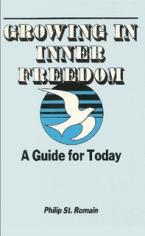
40 DAYS - AND 40 WAYS - TO GREATER SPIRITUAL
FREEDOM
As author Philip St. Romain says,
"healthy attitudes lead to healthy life experiences." And in
this book, he suggests a program to help you develop and
nurture life-enriching attitudes.
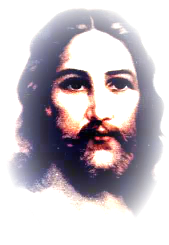
Using Jesus Christ as a model of spiritual freedom, and
citing
lessons found in the Scriptures, Growing in Inner Freedom contains 40 time-tested practices including:
Live
by Faith, Not Feelings
Don't Worry Uselessly
Count Your Blessings
Practice Forgiveness
Go the Extra
Mile
Do you only dream of discovering
true inner freedom and living life to its fullest? This
forty-day program can help make your dreams a reality.
About the author
In writing this book, Philip
St. Romain, D. Min. has
drawn on his background as a trained biologist, campus
minister, and substance abuse counselor. He has ministered
as a retreat master for the past 13 years, and currently
serves at Heartland Center for Spirituality in Great Bend,
KS. Married and the father of three children, Philip and his
family reside in Wichita, KS
- - - - - - - - - - - -
- - - - - - - -
Imprimi Potest:
John F. Dowd, C.SS.R.
Provincial, St. Louis Province
Redemptorist Fathers
Imprimatur:
+ Edward J. O'Donnell
Vicar General, Archdiocese of St. Louis
ISBN 0-89243-259-4
Library of Congress Catalog Card Number: 86-82168
Copyright 1986, Liguori Publications
Printed in U.S.A.
All rights reserved. No part of this book may be reproduced,
stored in a retrieval system, or transmitted without the
written permission of Philip St. Romain.
Scripture texts used in this work are taken from the NEW AMERICAN BIBLE, copyright 1970, by the
Confraternity of Christian Doctrine, Washington, D.C., and
are used by permission of copyright owner. All rights
reserved.
- - - - - - - - - - - -
- - - - - - - -
Contents
Preface
WEEK ONE: A BASIC APPROACH
TO LIFE
WEEK TWO: LETTING GO OF
FEAR
- 8. Know Your Worst Enemy
- 9. Don't Worry Uselessly
- 10. Avoid Favoritism
- 11. Mind Your Own Behavior
- 12. Don't Look Back
- 13. Do God's Will, Not
Yours
- 14. Accept the Certainty of Your Own
Death
WEEK THREE: ENJOYING THE
SIMPLE THINGS
- 15. Slow Down
- 16. Make Use of Your Senses
- 17. Count Your Blessings
- 18. Cultivate a Sense of
Humor
- 19. Try a Little Madness
- 20. Take Care of Your Body
- 21. Enjoy Yourself
-
WEEK FOUR: RELATING IN
LOVE
- 22. Praise God!
- 23. Control Your Tongue
- 24. Take the First Step
- 25. Be More Affirming
- 26. Learn to Listen
- 27. Speak for Yourself
- 28. Practice Forgiveness
WEEK FIVE: WORKING
IN THE KINGDOM
- 29. Develop Your Talents
- 30. Let Yourself Dream
- 31. Share Your Talents
- 32. Witness Christ Through
Ministry
- 33. Examine the Kind of Work You
Do
- 34. Live a Simple Life
- 35. Go the Extra Mile
WEEK SIX: CARRY
YOUR CROSS
- 36. Challenge Your
Self-will
- 37. Do Your Duties Gladly
- 38. Learn to Wait Patiently
- 39. Practice Humility
- 40. Suffer Gracefully
-
- - - - - - - - - - - - - - -
Preface
There will come a time in each of our lives when, in the
face of death, we will have to reflect upon how we have lived. It is
a helpful spiritual exercise to imagine ourselves in this situation.
What would we like to be able to say about our lives as we reminisce
on our deathbeds? For what would we like others to remember us?
It may seem a bit morbid to begin a book on inner spiritual freedom
in this manner, but the leaders of all religions have stated time and
again that the reality of death should serve to remind us of the
fragility of life. We cannot know the day of our death or its
hour. so the time to begin living fully is today.
For myself, I would like to look back on my life with the
satisfaction that I did the best I could to live as fully as possible
each and every day. I also think it would give me great consolation
to know that there are other people in this world who lived more
enriching lives because of me. Staring in the face of death, I want
to be able to say that I have taken risks, tried to correct my own
mistakes, forgiven the mistakes of others, and enjoyed everything as
much as I could in gratitude. I hope to be able to say that I bore my
sufferings patiently and supported other people in their own pains.
Finally, I would like to be able to accept my death as the last stage
of growth into the fullness of God's love.
As I strive each day to make this dream come true, there are many
forces I encounter which can destroy my dream if I let them. First
and foremost is my own selfishness and its tendency to seek
fulfillment solely in terms of pleasure, status, power, wealth, and
security. The culture lam a part of also seems to glorify and support
these selfish tendencies of mine. But of this I am certain: pleasure,
status, power, wealth, and security will count for little when I am
on my deathbed.
This does not mean, however, that pleasure, status, power, wealth,
and security are unimportant. They are important, and
our earthly lives would be almost intolerable without them. But these
worldly values do not bring us lasting satisfaction; and worse, they
rob us of our freedom.
The truly free person is the one who can enjoy pleasure, status,
power, wealth, and security, but who knows that there is something
that is much more enriching than all of them combined. That person is
free who is
happy with or without mundane gratifications, and who is indifferent
to possessing them.
Is such freedom possible? I believe it is, for I am enjoying it more
and more each day -- even though I've a long way to go. I believe the
great religious leaders and saints of all ages knew this freedom
about as perfectly as is possible in this world.
The secret of how to live in spiritual freedom is not really a secret
at all. Nevertheless, it is very difficult to realize in actual
practice. We can all learn this so-called secret; and if we are ready
to live out its demands, we will find true freedom.
The secret is this: We are really children of God, and the
purpose of our lives on earth is to know, love, and serve him. If we
prefer nothing more than to know, love, and serve God, we will be
free.
Simple, isn't it? We've probably heard it a million times.
But understanding this truth in our minds is much easier than feeling
it in our guts and building our lives around it. That is how this
book can help.
My model for the spiritually free life is Jesus of Nazareth. I know
there have been many spiritually free people among Buddhist, Moslem,
Jewish, and other religious groups, but I believe that the
Resurrection of Jesus is of special significance. The Resurrection is
God's eternal affirmation of the life and teachings of Jesus -- that he is the one who has the words of eternal life (John
6:68). It is also a promise that we, too, shall enjoy his freedom and
joy in this world and in the next if we follow the guidelines of
Jesus. This means, however, that we shall have to learn to carry his
cross which, by the way, is the central conviction of these
pages.
The primary concern of this book is to help nurture within the reader
an attitude of inner freedom. It is my firm belief that
healthy attitudes lead to healthy life experiences. The lessons
herein contained have their roots in Scripture and in the wisdom
literature of other religions. They have been tried and tested for
ages. Those who practice the principles outlined here will find
enrichment for their own life experiences.
There are forty short chapters in this book, so it can be used as a
Lenten guide or as a forty-day renewal process any time of the year.
Each chapter heading is a slogan which, it is hoped, can be called to
mind during appropriate times each day.
The chapters are arranged in weekly themes beginning with basic
principles pertaining to our personal attitudes about God and self,
then branching out into wider involvements. In order to experience
the full impact of this renewal process, it would be best to start
with chapter one and work through in systematic fashion. It is also
recommended that no more than one new chapter be taken up each day.
Reading ahead is fine, of course, but practicing these principles is
far more important than merely understanding them.
Several people who have read sections of this book remarked that it
is concerned almost entirely with personal, and not social, issues.
My primary focus in this book is indeed the renewal of individuals, with the realization that all social units
are collections of individuals. Nevertheless, these principles are as
relevant to communities and governments as to individuals. To the
extent that these principles are practiced, there will be peace and
goodwill among communities and nations. To the extent that they are
ignored, there will be discord.
Spiritual living skills must be learned; attitudes and
feelings must be studied and experienced if we are to profit from
them in our lives. Lest we think that inner freedom is merely the
result of our own efforts and energies, however, we should remember
that the reason these principles work so well is because they are in
accord with God's will for us. It is God, after all, who calls us to
grow in inner freedom. It is his grace which enables us to do so.
- - - - - - - - - -
1. Remember
Who You Are
God created man in his image;
in the divine image he created him;
male and female he created them. (Genesis 1:27).
Who do you say that you are?
If you are like most people, you will
define yourself in these or similar terms:
- the work you do -- I am a teacher;
- the spouse you are wedded to -- I am
Lisa Smith's husband;
- the children you are raising -- I am
Rita and Joe's father;
- the parents who raised you -- I am Lou
and Ann's son;
- the teams you are fanatic about -- I
love the L.S .U. Tigers;
- your ethnic background -- I am a
Cajun;
- the country in which you live -- I am
an American;
- the religion to which you belong -- I
am a Christian.
All these relationships, of course, are
part of who you are. But which one of them is most uniquely you? Are
you merely a composite of all these relationships? If you were to
lose one or two of them, would you still be you? If you were to lose
them all, would that destroy your identity?
Who are you, then? If you still do not know, then begin to trust the
insight of all the great spiritual teachers who have ever lived. What
they say is summarized in the verses from Genesis quoted above.
Put simply, you are a child of God. This does not mean
that you are not also someone's friend, or lover, or a citizen of a
certain country. You are all of those, but you are also much
more.
Deep within you, in your heart of hearts, there is a spiritual place
that only God can touch. He wants very much to live
with you in that place, but you must invite him to do so. Like a
courteous lover, he will always respect your freedom. If you invite
him in, however, you will come to know yourself as a child of God.
You will come to define yourself more so in terms of your
relationship with God than in terms of your earthly relationships.
You will gaze out at the world as one who is loved by God, and you
will come to see other people and all creation in the light of his
love.
It won't always be easy or even fun, but it will be life in truth and
reality. What could matter more?
Practical Suggestions
- Reserve a few minutes for quiet time.
Relax and place yourself in God's presence. Read Revelation 3:20.
Hear Christ knocking on the door to your heart. In your
imagination, go to the door and let him in. Engage in loving
conversation with him.
- Remind yourself several times each day
that you really are a child of God. Don't let anyone or anything
convince you otherwise.
- - - - - - - - - -
2. Refrain
From Passing Judgment
Even upon the servants and the
handmaids,
in those days, I will pour out my spirit (Joel
3:2).
If put to the question, each of us would probably say that
we are far from perfect. Even so, there is no doubt that we know
people who are more imperfect than we are. Far too
often, this awareness spills over into judgments: we decide that we
are better than those others. When we do this, we judge
others and place a barrier between ourselves and them.
Judging others is different from forming an opinion about them. It is
impossible not to have an opinion about other people -- especially
about people we see very often. It is also perfectly natural to feel
drawn toward certain people, places, and things and away from others.
The problems arise when our opinions spill over into our judgments.
Then those people, places, and things that draw us to them are
labeled "good," while others are labeled "bad." We are not really
free when we set ourselves up as custodians of the moral order of the
whole world.
God judges no one. In Scripture, there is no record of
Jesus saying to anyone, "Sorry, but I can't love you because you're
too bad!" When we withhold acceptance from other people, and even
from our messy world, we are placing ourselves above God. Talk about
conceit!
The next time we find ourselves judging people, we should remember
that the Spirit of God lives within them. We must try, instead, to
see all people as imperfect pilgrims on a journey to God, which is
the truth about life here on earth. We may have gifts that our
pilgrim brothers and sisters do not have, but that does not make us
better than they are. It only means we must share our gifts to help
them along while being open to the gifts they can share with us.
We should not even presume to judge ourselves. It's true: we're
confused! But the next time we begin thinking harsh thoughts about
ourselves, we must stand firm and say to ourselves: "We hear what
you're saying, but we must know that the Spirit of God lives within
us." If God has accepted our hearts as worthy dwelling places, what
right do we have to judge ourselves?
We accept the world of nature -- from beautiful sunrises to
devastating hurricanes -- and the people-made world -- from traffic
jams to enervating pollution -- without question. We do not have to
like them all, and acceptance does not mean that pollution, for
example, ought not be cleaned up. What acceptance does is place us in
relationship with the world in which we live. It is only by
being related to this world that we will become human beings and
begin to care as God cares about this world.
When we pass judgment, we set ourselves apart from this world
and
from the God who dwells within it.
Practical Suggestions
- Think of people, places, and even
sinful circumstances that disturb you regularly. Hear Christ
saying, "I have chosen to stay there today." Ask him for the
grace of acceptance.
- Pray the Serenity Prayer whenever
you become aggravated and judgmental: God, grant me the
serenity to accept the things I cannot change, courage to
change the things I can, and the wisdom to know the
difference.'
Download
the entire book
- - - - - - - - - -
5. Do What
You Are Doing
Their amazement went beyond all bounds: 'He has done everything
well' (Mark 7:37)
There is a story told about a student of
the spiritual life who visited a great master with the hope of
learning how she was to spend her life. "Teacher, what is the most
important thing in the world for me to do?" she asked
expectantly.
"What are you doing right now" replied the master. "I am waiting for
your reply, Master." "And what were you doing yesterday at this time"
"I was helping with the yard work," stated the young woman,
confused.
The master gazed at her expectantly for a few moments, awaiting
comprehension. Noting only bewilderment, he finally said: "The most
important thing for you to do now is to pay attention to yourself and
to listen to my words." "The most important thing for you to have
been doing yesterday at this time was to be paying attention to
yourself and working in the yard." ''Throughout life, your most
important task is to do what you are doing right now, and to do it
well." The student looked at the master in disbelief. Convinced that
she had wasted her time making this journey, she left
immediately.
Most of us are very much like this young student of the spiritual
life. We tend to think that certain moments are more unimportant, and
we concentrate only on the activities we consider most important. If
we think this way, we shall find it difficult to live in the present.
Consider briefly the life of Jesus of Nazareth. Jesus never forgot
the importance of ordinary life lived well. He taught that those who
do small things well can be entrusted with larger ones. But he also
reminded us that those who do not do well what they are doing now are
not yet ready for other things (see Luke 16:10). The kingdom of God
is now, and nothing we do is unimportant in the eyes of God. That is
the meaning of the Incarnation.
Even those big moments of life -- the conception and birth of a
child, Baptism, weddings, funerals, etc. -- are meaningless if we do
not live well what has gone before them. In fact, celebrations are
hollow and empty if they do not celebrate something that is already
there. Big moments can help to affirm the dignity of small moments,
but only if those small moments have been lived well.
At each and every moment of the day we must decide what is the most
important thing for us to be doing. Perhaps we will decide to pray,
to work, to play, to reminisce, or even to do nothing. This decision
may not be entirely ours to make; our work schedule or a crying child
may decide for us how we must spend our time. The important thing is
to remember that life is calling for a response from us, then to
surrender ourselves completely to doing what we decide to do in the
best way we know how. Know that all moments are equally sacred in the
eyes of God and that no task is too unimportant to be done well.
Suggested Practices
1. Stop several times a day and greet yourself and God. Ask yourself,
"What am I supposed to be doing now?" Listen to your heart for a
response; then do what you are doing and do it well in gratitude.
2. Take a few minutes each evening to look back on your
day.
- Were you living in the present?
- Did you strive to do well what you were
doing at the moment?
- Thank God for those moments you lived
well; ask his pardon for times lived in complacency and
inattentiveness.