Contents
Preface - p. 4
Part One: The Meaning of the Resurrection
Introduction - p. 6
1. The Witness of the Church - p. 11
2. The New Life in Christ - p. 25
3. The Incarnation: God is With Us - p. 34
4. When Good Things Happen to Bad People - p. 41
5. Courage to Live - p. 49
6. Meaning in Life and History - p. 60
Part Two: Encountering the Risen Christ
1. The Personal/Historical Christ: 1 - p. 72
2. The Personal/Historical Christ: 2 - p. 75
3. Christian Community: 1 - p. 80
4. Christian Community: 2 - p. 85
5. Sacramental Encounters: 1 - p. 90
6. Sacramental Encounters: 2 - p. 94
7. The Cosmic Christ: 1 - p. 100
8. The Cosmic Christ: 2 - p. 105
Part Three: The Gift of the Spirit
1. Overview of Presentations - p. 112
2. Jesus’ Teaching on the Holy Spirit - p. 116
3. The Coming of the Spirit - p. 122
4. Transformative Gifts - p. 127
5. Charismatic (Ministry) Gifts - p. 131
6. The Gift of Tongues (Glossalalia) - p. 137
7. The Holy Spirit and Christian Theology - p. 142
8. The Fruits of the Spirit - p. 150
Suggested Reading - p. 155
Preface
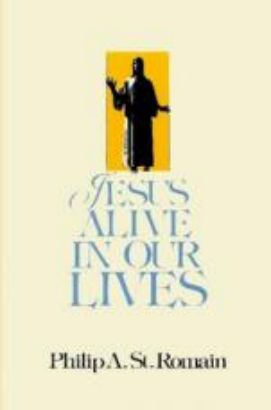
This book bundles together three related works previously published for different purposes. Part One, “The Meaning of the Resurrection,” includes chapters from my 1985 Ave Maria Press publication entitled Jesus Alive in Our Lives. I have retained the Ave Maria Press title for present book as it seems to capture very well the theme that runs through all three parts: namely, that Jesus is risen, and we can come to live our lives in relationship with him and be blessed by the Spirit he shares with us. The primary concern of Part One, however, is to review what the scriptures have to say about the resurrection, as well as what they cannot tell us. We will also reflect on the meaning of the resurrection from a variety of perspectives.
Part Two, “Encountering the Risen Christ,” was initially presented as eight Internet retreat conferences during Lent 2004 (the series was entitled “Growing in Christ)). There were about 40 participants who received these conferences via email and shared their responses to the reflection questions at the end of each on a discussion forum I set up for this purpose. Nothing in the material has been changed, except to substitute the word “chapter” for “conference” where it occurs in the text. Hence, the informal, dialogical style of a retreat conference is retained.
Same goes for Part Three, “The Gift of the Spirit,” which was also an Internet retreat presented during the Easter season in 2004 to the same participants (and entitled “Come, Holy Spirit”).
I am happy to make these three works available in book form through Lulu.com publishing. Please visit the discussion forum at shalomplace.com if you would like to share your own responses to the material presented.
1.
The Personal/Historical Christ: 1
As a Catholic growing up, I was often mystified by Protestants’ affirmations of knowing Jesus as their “personal Lord and Savior.” Fundamentalists on the campuses of the University of Southwestern Louisiana (now the University of Louisiana at Lafayette) and Louisiana State University were particularly insistent on the importance of this kind of knowledge. I had faith in God, and believed all that the Church taught about Jesus—his resurrection, ascension, and the victory won over Satan and death—so I didn’t think I was lacking a great deal. Even after attending a Cursillo retreat in 1973 and then becoming involved in Charismatic Renewal, I still felt drawn more to God and the Holy Spirit than to Jesus. People in the prayer meetings would talk to Jesus with such fervor, as though he was standing right next to them, interacting with them; they would speak to “the Lord” about this and that with great confidence, assured that he heard them and cared for them. I envied the intimacy they seemed to have, and prayed that I might come to know the same.
Part of my “problem,” as I see now, is that I’m an intellectual kind of person (INTJ - Meyers/Briggs), and it’s really difficult to open my heart if things don’t make sense to me. I couldn’t just “jump in” and have relationship with Jesus without having a clear sense of what I was doing. God was invisible and Personal Spirit, in my mind, so relating to God came easier to me than relating to Jesus. My primary connection with Jesus was through the Eucharist (Sacramental mode of presence), for that is how I was taught he manifests to us now. I could sit in prayer before the Blessed Sacrament and experience the peace and presence that seemed to emanate from the Eucharist; this was a practice I often enjoyed, sharing my life with my Eucharistic Lord, and often just resting in the mysterious silence that gripped me in such a satisfying way. I spent hours at night sometimes in candle-lit Churches, enjoying the quiet, the solitude, the distinctive smells. . . I knew my life was linked with that of Christ, but there was also a sense of something missing in my relationship with him.
A breakthrough came in 1981, when I attended an 8-day silent, directed retreat at Grand Coteau, Louisiana. During my first session with the spiritual director, I was assigned several Scripture passages to use for my prayer times during the day ahead. One of them was from a Gospel, I forget which one, now. But I remember the words of the retreat director about praying with the passage, for this helped to open me up to that sense of a personal relationship with the historical Jesus. She told me that the ascended, Eucharistic Christ is the same person who once walked the earth 2,000 years ago. I knew this intellectually, of course, but then she added that his memories of that life are still with him, and that when we read the Gospel, we can connect with him through his memories of those occasions. I started to get hung up in my mind on how much of the Gospels are literally true—I’d read enough Biblical criticism to know that the they aren’t always historical fact—but I suppose a grace of some kind shut down that line of thinking and enabled me to be open to what this holy nun was saying. She went on with her brief and simple teaching to note that Jesus wants us to know him, and the Gospels provide us with a means to encounter him. The words are not simply “lessons,” but a means of encountering Jesus’ own living memories and, hence, his Person. Her words opened me to possibilities that I hadn’t thought of before.
Now you might be rolling your eyes as you read this, saying, “Of course, Phil: where were you all those years?” Well, I was in the right place, for the most part, but I had been reading the Gospels to know “about” Jesus, and to learn the values and theological principles he taught. I knew about mental prayer and had tried several methods, but something just hadn’t clicked. Reading the Gospels as a means of encounter with the personal Christ hadn’t been my experience, but that changed on my 1981 directed retreat. As I read through and prayed with various Gospel passages that week, it seemed as though a bond of love was growing with the Person of Jesus. I came to know him as a human being, and that opened a way to friendship and kinship. He became less abstract and remote, more lovable, and more “real.” It was as though in reading the Gospels, I was listening to him describe what his life had been like. With the encouragement of my director, I tried St. Ignatius’ method of imagining oneself in Gospel scenes with Jesus, conversing and interacting with him as one of the participants. This worked better for some passages than others, but there were times when I had a definite sense that Jesus was communicating his thoughts and memories to me . . . that I wasn’t just imagining things, but actually receiving communication from Jesus through the faculty of imagination. This has happened numerous times through the years since.
As you can tell, that 1981 retreat was a turning point in my relationship with Jesus. I don’t always have that strong sense of encountering him in the Gospels as I did then, but I haven’t lost the feeling of friendship and connection that was awakened. I will always know that Jesus is human—a man like us in all things but sin—and that I can turn to him as another human being and be understood. This was not always the case when my image of Christ was of a being mostly divine and somewhat removed from the human struggle.
I’ll stop here to allow for a time of reflection and discussion. In our next chapter, we’ll go more into methods and disciplines for developing a relationship with Jesus
Questions for Reflection and Discussion
1. What part(s) of this chapter can you relate to?
2. How would you describe your relationship with the personal, historical Jesus?
3. What questions or comments would you like to ask about this topic?